Custom POP Display Stand Printing in Dubai — Everything You Need to Know
Point-of-purchase (POP) display stands are one of the most powerful tools in retail marketing. Positioned at the exact moment a customer is making a purchase decision — at the checkout, at the end of an aisle, beside a product category or at a brand activation — a well-designed POP display stops attention, communicates product benefits and drives conversion. At Colordots, we design and produce custom POP display stands for retailers, FMCG brands, cosmetics companies, banks, hospitality groups and event organisers across Dubai and the UAE.
Choosing the Right POP Display Type
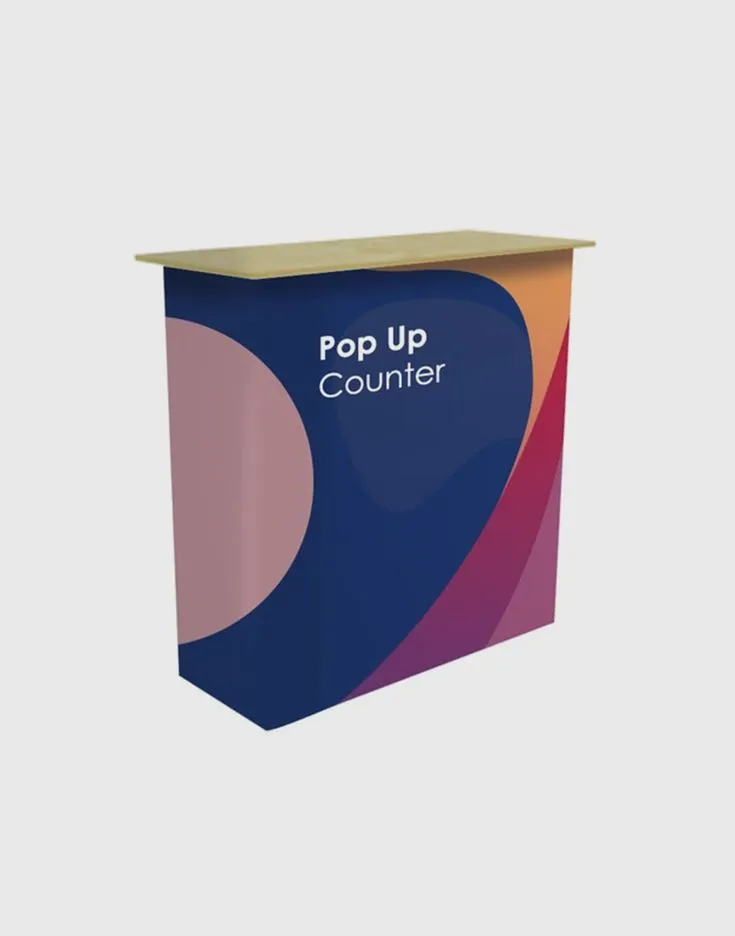
Counter display stands sit at the point of sale — on a checkout desk, reception counter or service bar. They are typically compact corrugated cardboard or acrylic units that hold product samples, brochures, loyalty cards or impulse purchase items. The goal is maximum brand visibility in a small footprint at the highest-traffic moment in the customer journey.
Floor standing displays are freestanding units placed in high-traffic retail zones — end of aisle, store entrance, lobby or showroom floor. They range from simple single-panel pull-up banner stands to multi-shelf corrugated towers holding multiple product SKUs. Floor displays generate significantly more sales per square metre than standard shelf placement because they interrupt the shopper's natural path and create a dedicated brand moment.
Acrylic POS displays are the premium choice for luxury retail, banking, hotels and corporate environments where the display unit itself must communicate quality. Clear, frosted or coloured acrylic is laser-cut to custom shapes and digitally printed, producing a clean, professional finish that elevates the perceived value of the product or information it presents.
Corrugated Cardboard Retail Displays Explained
Corrugated cardboard is the most widely used material for FMCG and consumer goods POP displays because it is lightweight, cost-effective, fully printable and structurally strong enough to hold significant product weight. It can be die-cut to any shape, assembled without tools and printed with full photographic-quality artwork using digital or offset lithographic printing. Common formats include dump bins (open-top bins for loose product), pallet displays (full floor unit on a pallet base), shipper displays (a display that ships product inside and converts to a display unit in-store) and shelf trays (inserted into existing retail shelving to create a branded product zone).
Exhibition & Event Display Stands in Dubai
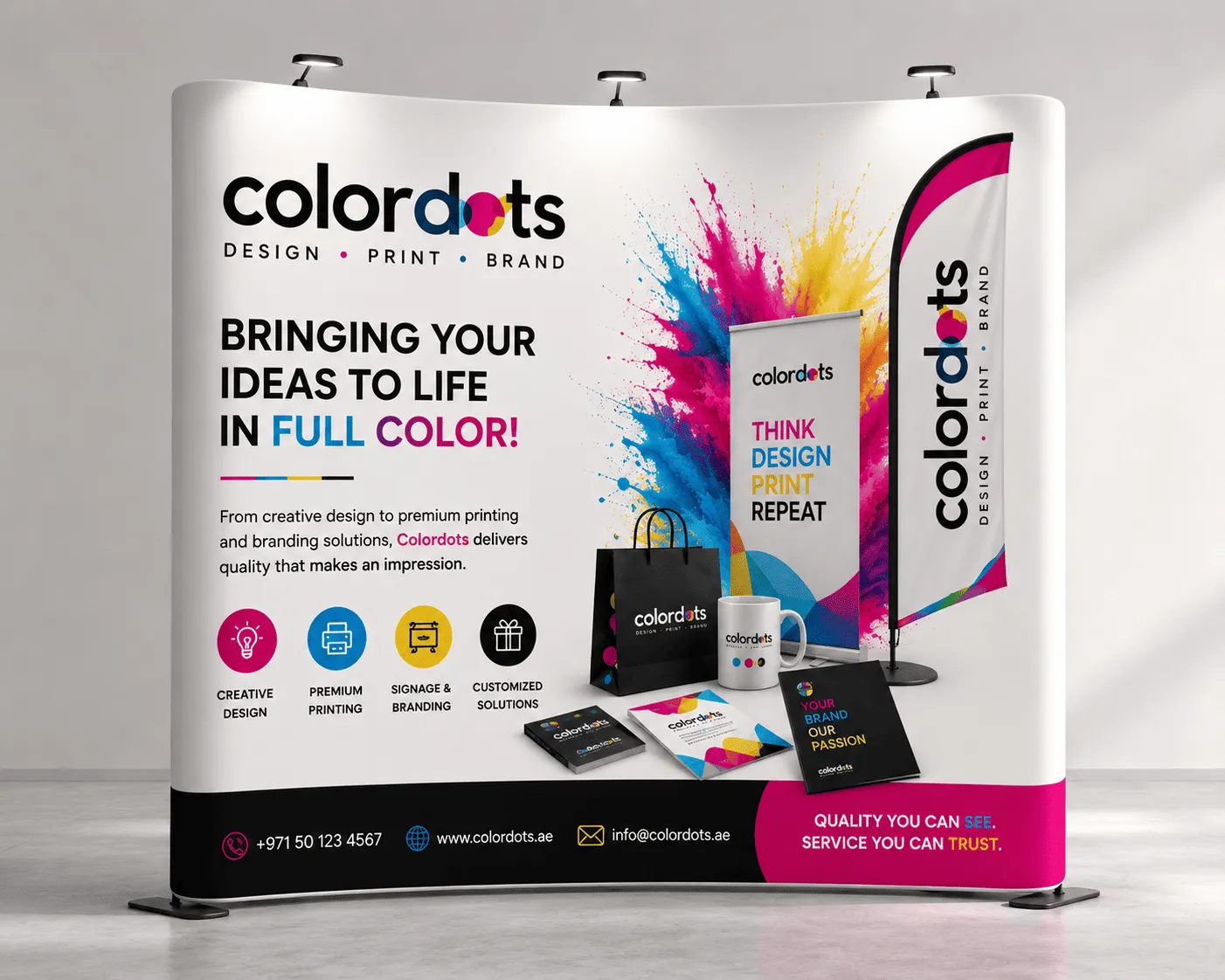
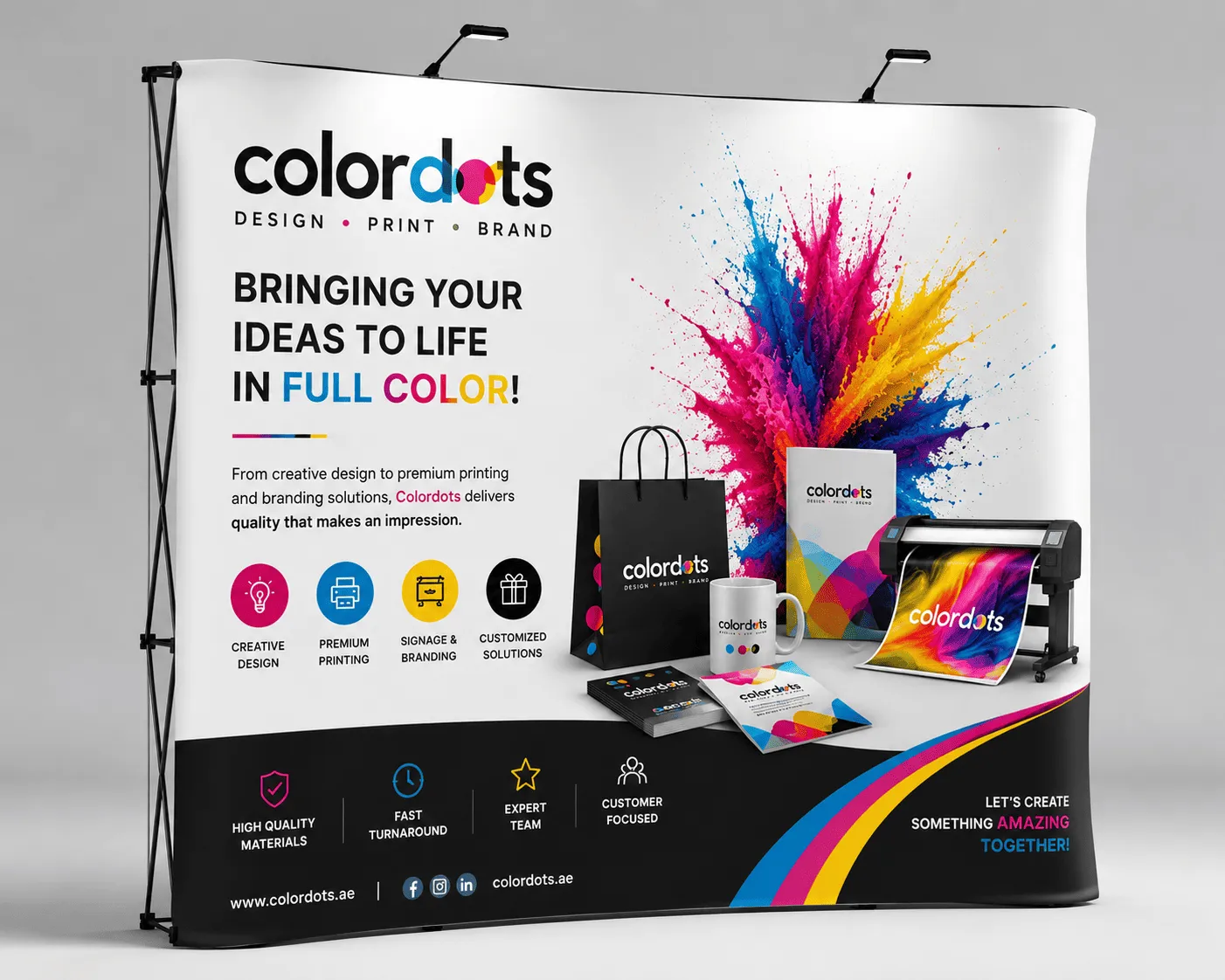
For trade shows, product launches and brand activations at Dubai World Trade Centre, ADNEC and other UAE venues, the most commonly used display formats are retractable roll-up banner stands (a single printed graphic on a spring-loaded roller mechanism with aluminium base), pop up curved display systems (a magnetic frame system that expands to form a curved branded backdrop), and fabric tension displays (printed fabric stretched over an aluminium frame for a seamless, back-lit or non-lit brand wall). All three formats are easy to transport, assemble without tools and reprint when brand visuals need updating.
Material Selection Guide
Corrugated cardboard (E-flute or B-flute) — best for short to medium-term retail displays, lightweight product, FMCG and promotional campaigns. Foam board — rigid, smooth-surfaced and lightweight, ideal for retail signage, header panels and short-term display graphics. Acrylic (clear, frosted or coloured) — premium finish for luxury retail, banking, hospitality and corporate display. Aluminium profile with printed fabric or banner — lightweight, reusable and ideal for exhibition and event applications. PVC and Dibond — durable, weather-resistant options for semi-permanent indoor and outdoor retail display signage.
Artwork & File Requirements
Supply print artwork as a vector file (AI or EPS) or high-resolution PDF in CMYK colour mode at 300 DPI, with bleed extended 3 mm beyond the cut edge. For structural displays, provide a brief and we will develop the dieline and structural design as part of the quoting process. Our design team will review your file, confirm colour accuracy and send a digital proof — including a 3D mockup of your display in context — before production begins.